Business Development: A Shift Toward More Intentional Growth
One of the clearest themes running through this year’s AAM Summit was that business development inside accounting firms is becoming far more intentional, measurable and structured than in the past. Across multiple sessions, speakers challenged firms to move beyond viewing growth as something driven only by relationships, personality or rainmaking instinct. Instead, the conversation focused on building repeatable systems, creating accountability and helping professionals become more effective in how they pursue opportunities and strengthen client relationships.
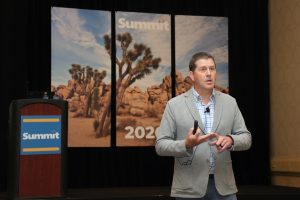
I had the opportunity to present a session on sponsorship ROI and firmwide buy-in, focused on helping firms maximize results from conferences and event sponsorships. A central message was that sponsorships rarely fail because of the event itself. They fail because there was no plan. We discussed how firms often invest heavily in sponsorships but struggle to define success metrics, qualify prospects effectively, track follow-up activity or report results back to leadership. Audience polling reinforced the challenge. Many firms still rely primarily on partner feedback instead of measurable business development data when evaluating sponsorship performance. The discussion emphasized the importance of creating a structured process before, during and after events to improve accountability and increase the likelihood of long-term ROI.
John Atkinson’s session, “Targeting & Landing Your Dream Clients,” focused on the importance of intentional targeting. His message was that too many firms continue to approach business development reactively instead of strategically deciding which clients they most want to pursue. He encouraged firms to define ideal client profiles, build focused target lists and use warm introductions through existing relationships whenever possible. One of the strongest takeaways was his emphasis on simplifying business development into manageable actions that professionals can realistically execute consistently. Rather than treating growth as a vague aspiration, he challenged firms to become more disciplined about who they pursue and why.
Matt Blank’s session, “The Art and Science of a Great Sales Conversation,” focused on the human side of business development. He reminded attendees that trust remains the foundation of every successful client relationship. His presentation challenged professionals to stop viewing sales conversations as persuasion and instead approach them as opportunities to help clients solve problems. Matt emphasized the importance of listening carefully, asking thoughtful questions and demonstrating genuine curiosity during conversations. In a profession filled with technically capable firms, his message was that the experience clients have during conversations is often what differentiates one firm from another.
Neil Barrow’s session, “Unleash Your Firm’s Growth Potential: Crafting a Winning Business Development Plan,” concentrated on reducing the friction that prevents professionals from engaging in business development consistently. He argued that firms already possess many of the relationships needed to generate growth but often fail to organize, prioritize and nurture those relationships effectively. Neil introduced practical frameworks focused on clients, referral sources, prospects and personal visibility. He repeatedly emphasized that business development does not need to be overly complicated. Instead, firms should focus on creating simple activity plans, clear accountability and repeatable processes that help professionals build confidence and consistency over time.
Taken together, these sessions reflected a broader shift occurring inside accounting firms.
Business development is increasingly being viewed not as an individual talent possessed by a small group of rainmakers, but as a strategic capability that can be taught, supported, measured and improved across an entire firm. Whether the discussion centered on sponsorship ROI, ideal client targeting, trust-building conversations or business development planning, the common thread was clear: firms that approach growth with greater intentionality and structure will be better positioned to compete in the evolving marketplace.
About Bob Silvy
Bob Silvy is the founder of Level Four Consulting, a Kansas City–based business development training and coaching firm that works with law firms and accounting firms nationwide. With decades of experience in professional services sales and revenue leadership, Bob helps firms turn business development from an abstract expectation into measurable, repeatable growth. His work focuses on practical skills, accountability, and clear KPIs that demonstrate ROI from training investments. Bob is an active contributor to the Legal Marketing Association and the Association for Accounting Marketing, and a frequent speaker on coaching professionals to embrace and succeed at business development.

Welcome to CPA Growth Trends — your source for information, insights, tools and best practices to drive growth within an accounting firm.
Beyond the Database: Building a CRM That Fuels Business Development
Nikki Burgeson | UHY-US
In this episode, Chris Camara speaks with Nikki Burgeson about the critical role of CRM systems in business development, particularly within professional services.